
The topic nobody wants to talk about
When plant protection comes up in an interview, everyone waves it off. Nobody talks about that, it doesn't exist in winemaking.
We see it differently. Most of our quality comes from very carefully thought-out plant protection. And we like talking about it, because that is the only way to learn more.
Eleven years organic, eleven different spray plans. Something has dropped away or been added every year. It's long since stopped being just about fighting fungi for us — it's about keeping the vine so vital that it copes on its own. Strictly speaking, that's no longer plant protection, it's plant strengthening.
One advantage we had was our own ignorance: when we started, we knew nothing. And those who know nothing ask.
Why coverage decides everything
Synthetic products penetrate the leaf and work from the inside. If a drop lands anywhere, that's enough. Biological products can't do that. They stay on the outside of the leaf and work by displacement: what sits in the leaf's stomata leaves no room for the fungus.
So in organic viticulture everything hinges on a single factor: how completely is the leaf covered? A spot without coverage is an open door.
Incidentally, that's how you can tell us apart from the road. If you walk past a row of vines and the leaves carry a clearly visible coating, it is almost certainly the organic vineyard. In the conventional one you see almost nothing.
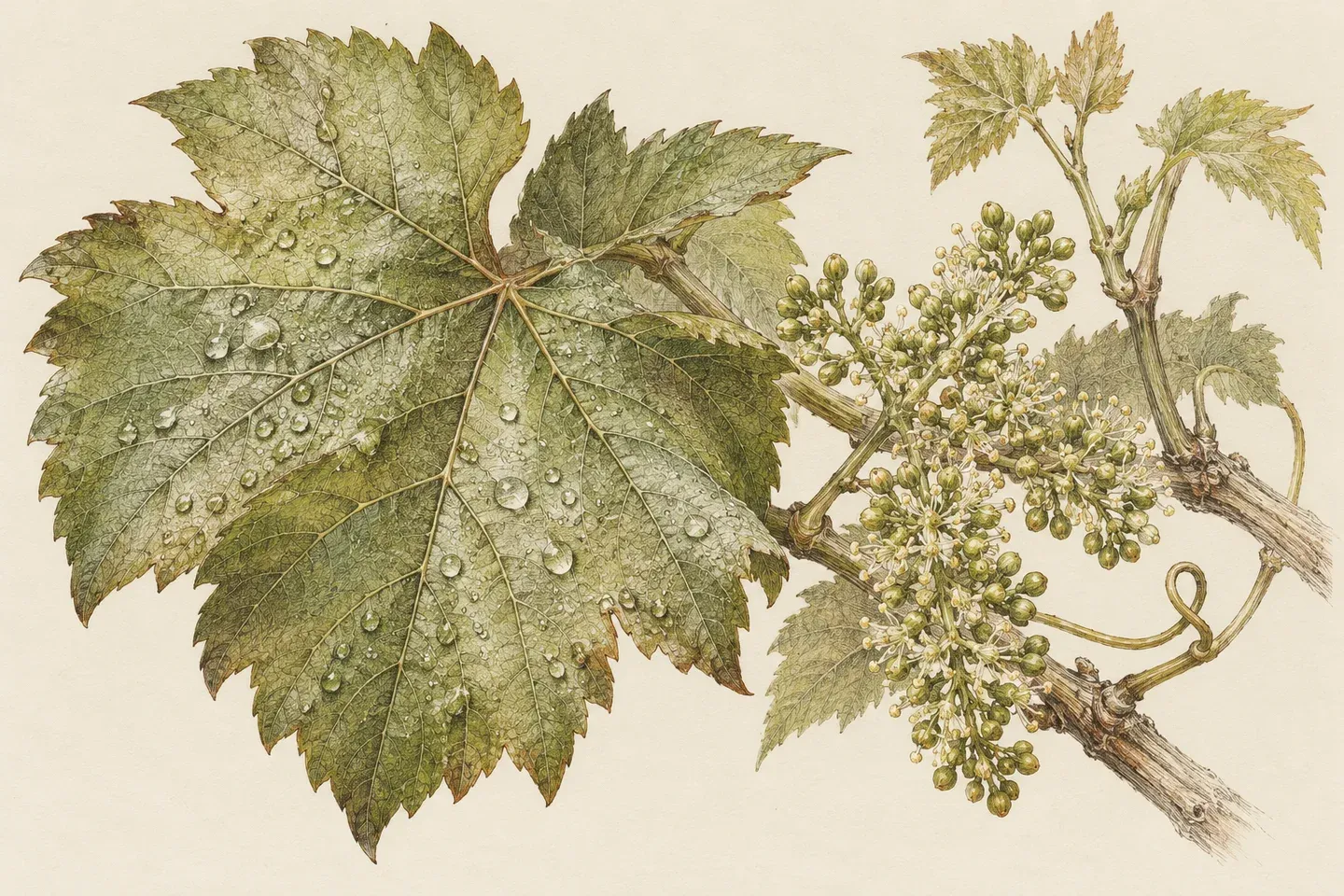
An uncovered spot is an open door.
The sprayer
To push coverage as far as possible, we bought what we consider the best machine currently on the market: a double-tunnel sprayer with atomisers instead of conventional nozzles.
It does two things better. The tunnel gets us very close to the vine, and the fine misting applies the product more evenly. And whatever the leaf doesn't catch is caught by the opposite side of the tunnel and pumped back into the tank.
So the product lies where it belongs. Nowhere else.
The treatment ends up where it belongs.
What we apply
We source our products locally, as far as possible:
- Chalk from the chalk factory in Mühldorf, just around the corner in the Leithagebirge
- Rock dust from the Aspang mines in the Bucklige Welt, plus a second one from Kitzbühel
- Fresh whey from a farm supplier in Wilhelmsburg
- Brown algae preparations for the vine's vitality
- Pine wood terpenes as an adhesive
- plus sulphur and copper in small amounts, as permitted by the EU organic regulation
Why we only spray in the evening
There's a saying that organic farmers always spray in the evening so no one sees them spraying.
The first part is true, the second isn't. We spray only in the evening and only below about 22 °C, because our products sit on the outside of the leaf and would scorch the vineyard in the heat. In the Thermenregion that is no theoretical danger. How it turns out when you get it wrong is on our mistakes page.
Forecasting instead of routine
Instead of spraying to a fixed schedule, we check the weather and disease pressure daily. Vinaria forecasting system, our own observations, experience. One treatment fewer per season, if the risk allows it.
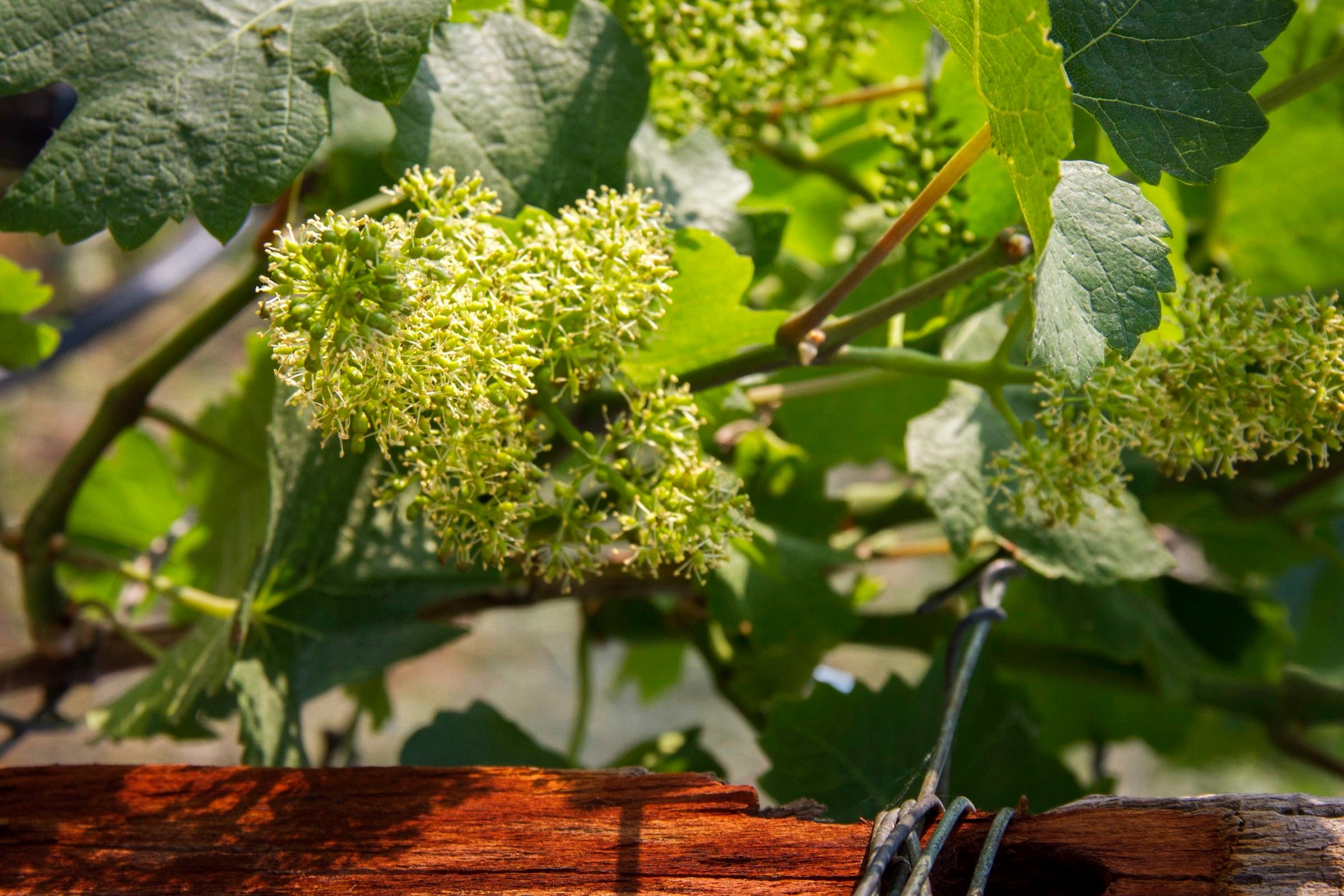
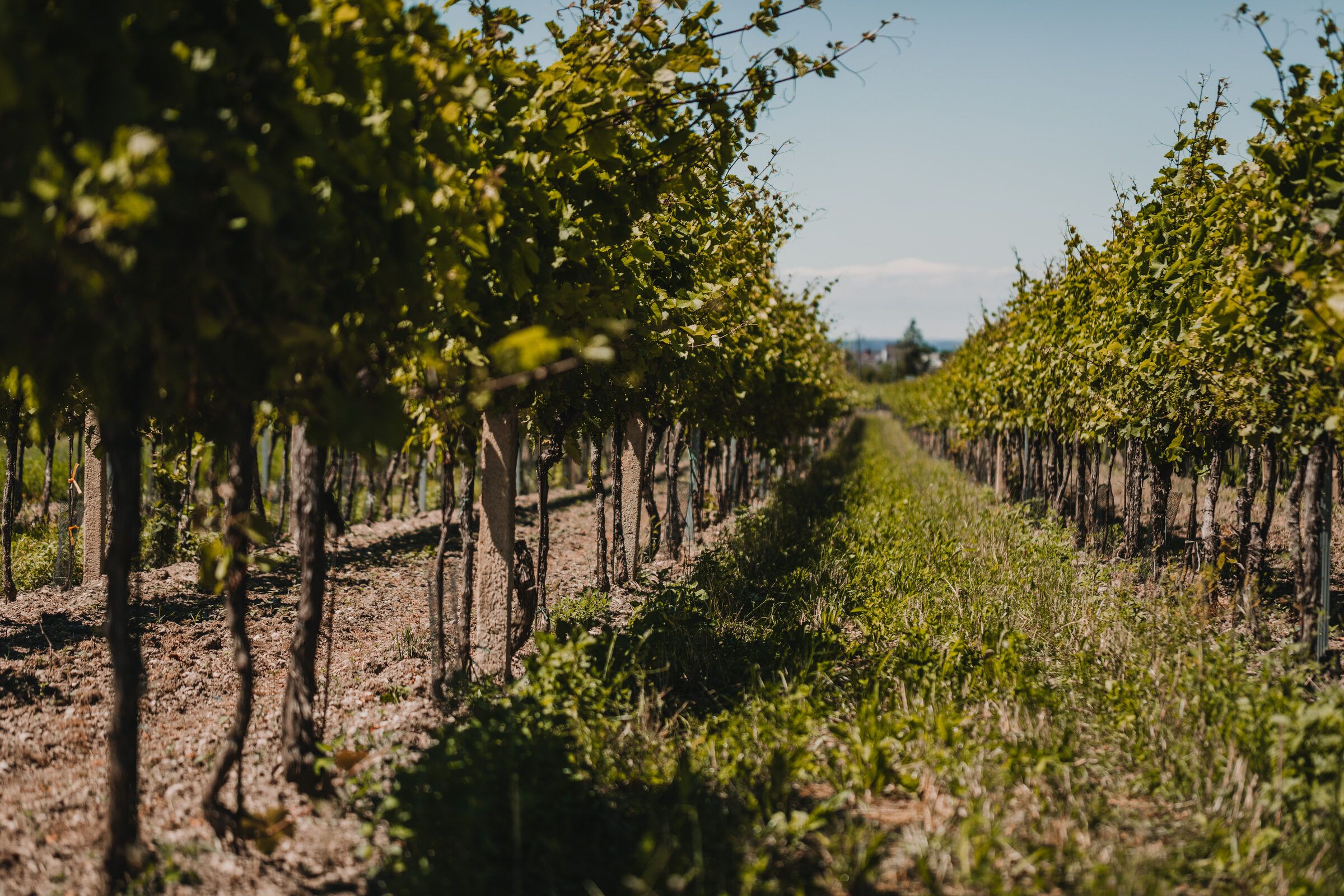
The fact that our vineyards around Teesdorf are windy and hot helps: fungal pressure isn't as extreme here as elsewhere.
Documentation, no secrets
Every treatment is logged: date, product, quantity, weather conditions, reason for treatment. The treatment log for each wine and vintage is recorded on the individual data sheet once we've completed processing.