
Before fermentation
The destemmer plucks the berries off instead of threshing them; a peristaltic pump moves the mash into the press without crushing it.
Instead of sulphuring the must, we have worked for four years with must yeasts that occupy the space before anything else can. This preserves aromas, prevents oxidation and saves a lot of sulphur. Many wineries skip this because the yeasts are expensive and their effect can’t be seen. We see it in the Sturm (partially fermented young wine), which stays in our cold room for a long time.
The whole mash then passes through a tube heat exchanger and goes down to below 15 °C. Because it is cool, we can leave it to stand for four to twelve hours. Some wines stay on the skins overnight and are only pressed the next day. After pressing we stir up the must again and again for six hours to draw the last aromas out of the sediment.
We fine with pure potato protein. This means our cellar works one hundred per cent vegan. We don't flotate: everything settles by itself in the cold room and the clear must is racked off.
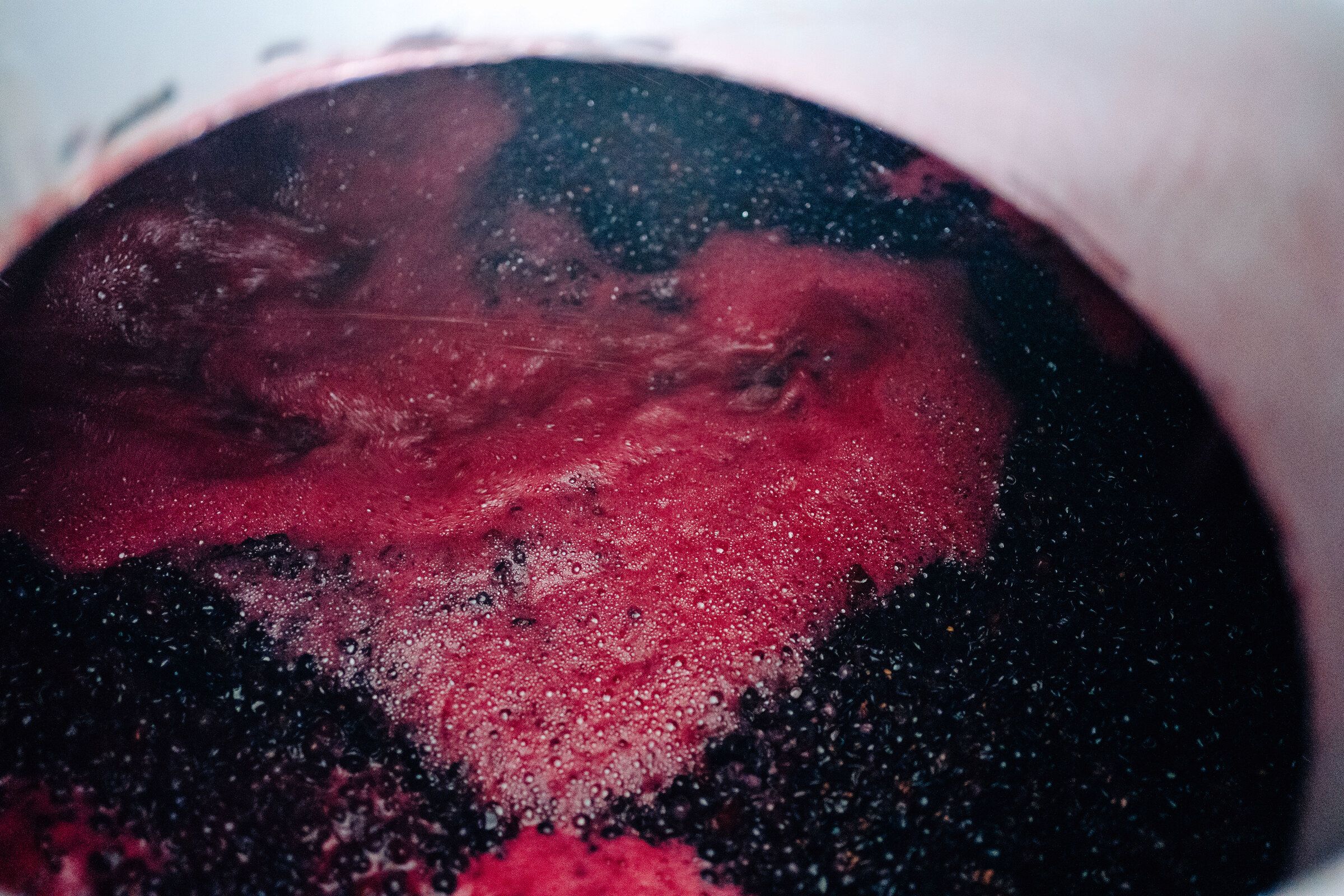
The yeast that travels through the whole cellar
At the start of the harvest we set up a single neutral sparkling wine yeast. Once a wine is in full fermentation, we take a bucket of it and add it to the next fresh tank. So the same fermentation travels through the whole cellar. We get through the entire harvest on one or two packets of yeast.
This isn’t a cost-cutting measure. A yeast that has been fermenting for four days is more alive than a freshly prepared one, in which half the cells lie dead in the packet. And because the yeast is neutral, you taste the vineyard, not the yeast.
We have tried aromatic yeasts several times over the years. Every time we went back, as you can read on our mistakes page.
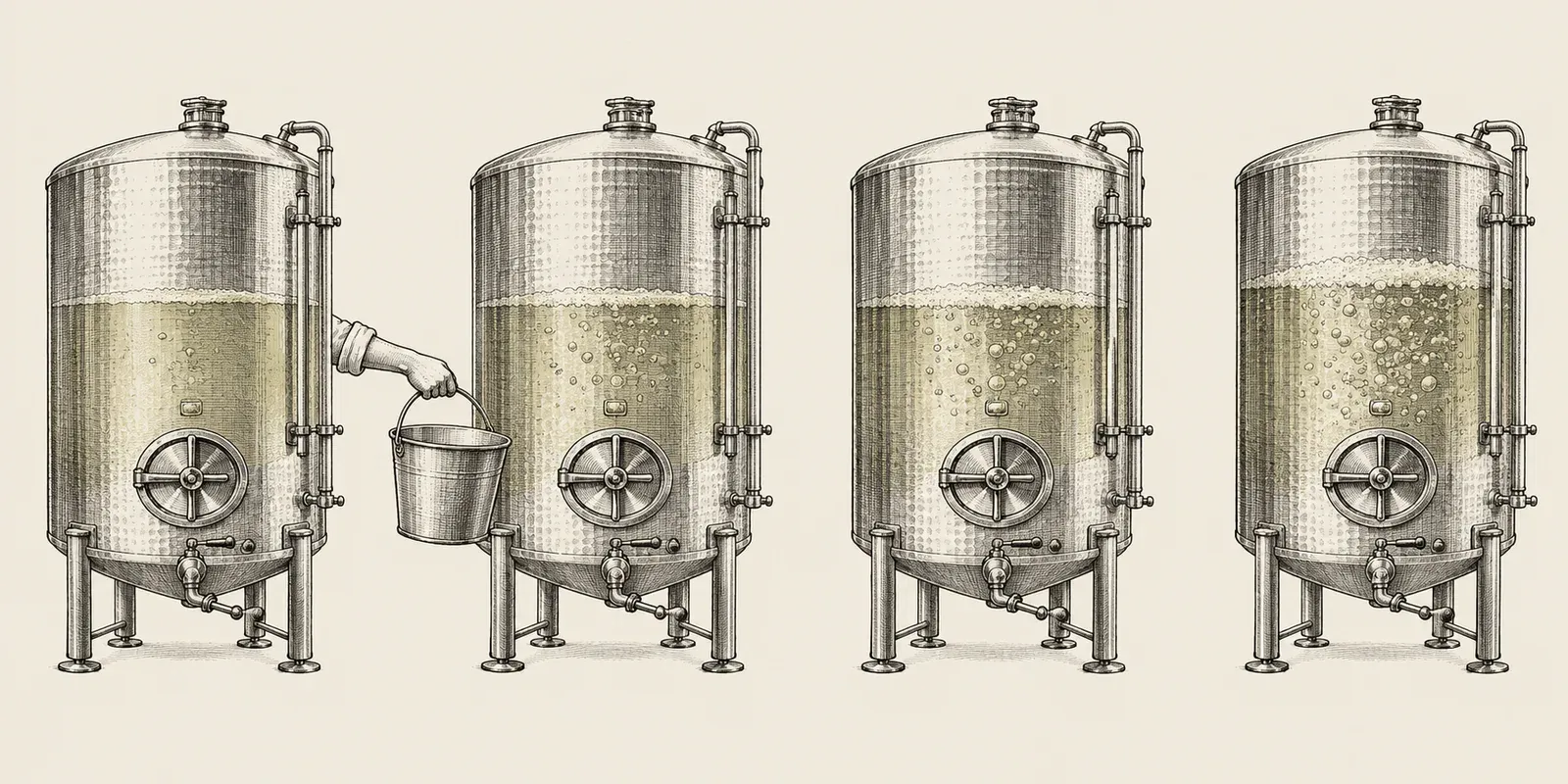
And because the yeast is neutral, you taste the vineyard rather than the yeast.
Red wine
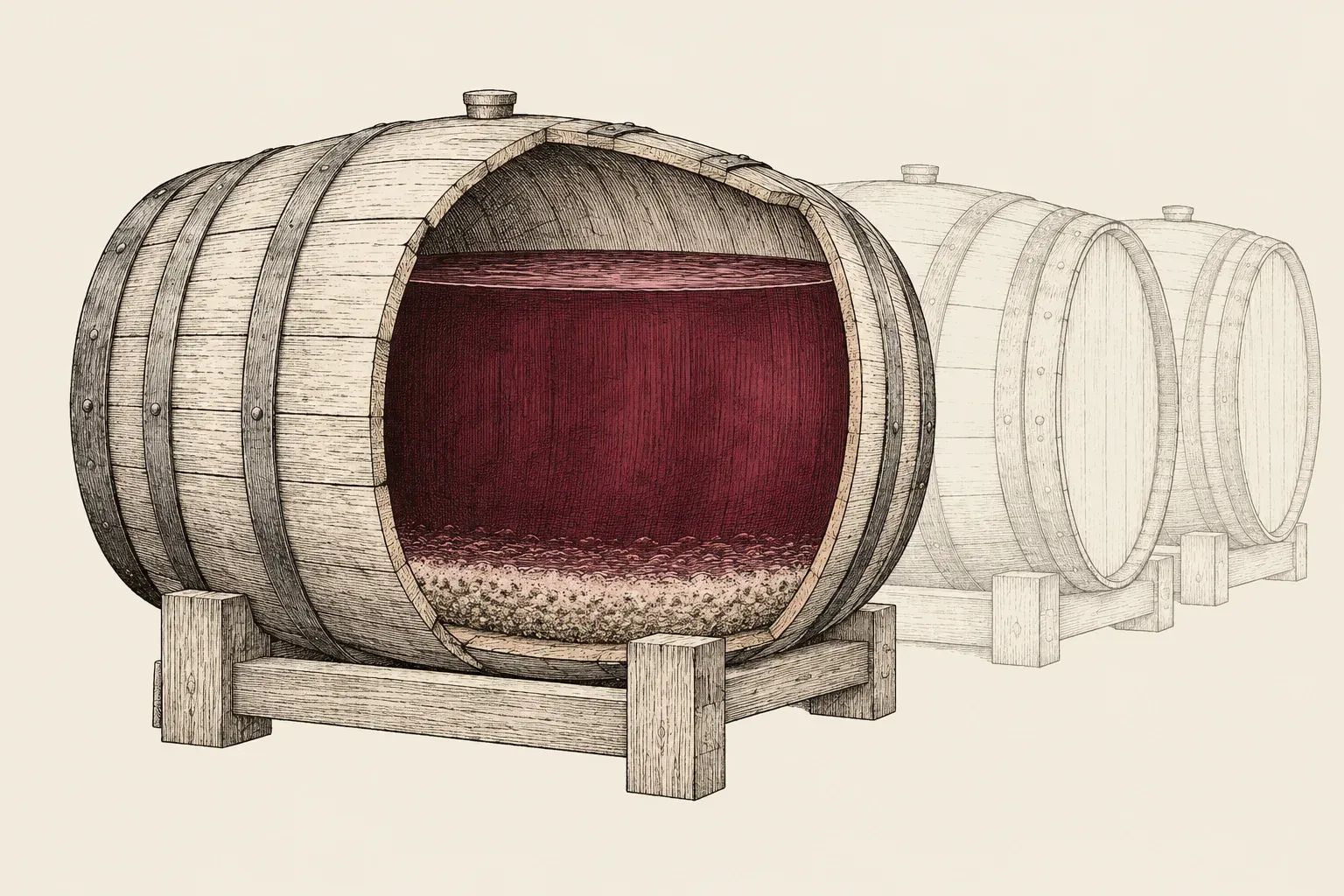
After fermentation the wine stays on the skins for ten to twenty days, depending on how quickly it runs through. Then it is pressed, settled for two days and goes straight into the barrique.
We don’t carry out malolactic fermentation at the same time as the alcoholic fermentation, but afterwards, in the barrel, over the first winter. This is the most important stage. The wine lies on the fine lees during this time and stays there until shortly before bottling.
Often malolactic fermentation isn't finished until February, sometimes not until May. Only then do we sulphur for the first time. That saves us a considerable amount of sulphur.
White wine
The white wines stay on the gross lees until about December. Then we rack them, check whether they still need bentonite, fine them and leave them on the fine lees until March. Bottling is at the end of March, beginning of April.
Wines matured in wood also go through malolactic fermentation for the whites, just as with the reds: fine lees over winter, first sulphuring between February and May. These wines usually come out of the barrels at the end of July.
The ranges
Reserve. The patient line. Depending on the variety, 20 to 80 per cent new barrels: more for the full-bodied varieties like Merlot, Cabernet and Syrah, less for Pinot Noir and St. Laurent. We also adjust the share of new wood to the vintage. For red wine we work with 300-litre barrels and are currently switching to 500 litres: the bigger the barrel, the more wine and the less wood you taste. The Pinot Gris is our only white reserve wine: three 300-litre barrels, one of them new each year.
Selection. For the white wines, roughly half wood, half steel tank. The steel portion retains the malic acid and thus the freshness, the wood portion goes through malolactic fermentation; in summer, both parts are blended. Bottling takes place at the end of August. For the red wines, only used barrels are used, for twelve months.
Classic. Aged on the fine lees, no malolactic fermentation, early bottling. The wines most guests drink from the list: reliable, true to the variety, drinkable young.
Purist. Minimal intervention: long ageing on the gross lees, little or no sulphur, unfiltered. The attempt to leave things out, consistently. What remains? Purist wines are not reproducible, a little different every year, sometimes even from batch to batch.
The larger the barrel, the more wine and the less oak you taste.
What ends up in the bottle
Our red reserve wines are mostly between 40 and 70 milligrams of total sulphur. That is very little for wines of this type. The late malolactic fermentation in the barrel makes it possible. For the white wines the figures are higher.
The art here isn’t the low total value, but the ratio: a wine is considered stable from around 30 milligrams of free sulphur. We reach that at around 60 total sulphur. Lots of bound sulphur would be the easier but worse route.
You can check it yourself: the figures are listed for every wine in the shop.
A lot of bound sulphur would be the easier but poorer option.
The barrels
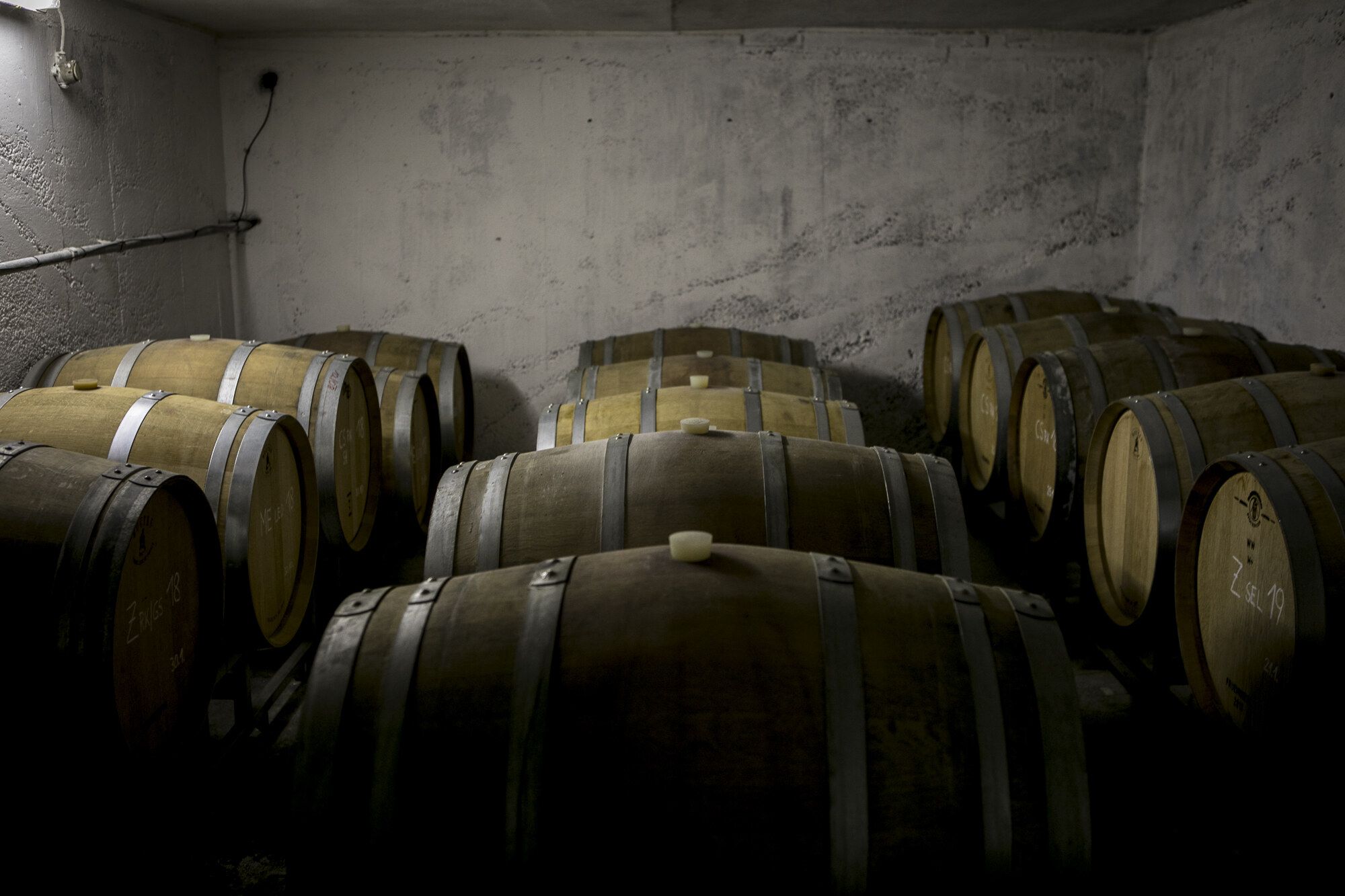
Our oldest barriques date from 2006 and 2007. We fill a barrel five to eight times.
It isn't about oak flavour for us, quite the opposite. A used barrel gives off hardly any aroma but lets the wine breathe. It becomes rounder, the tannins more pleasant. That is exactly what they are for.