
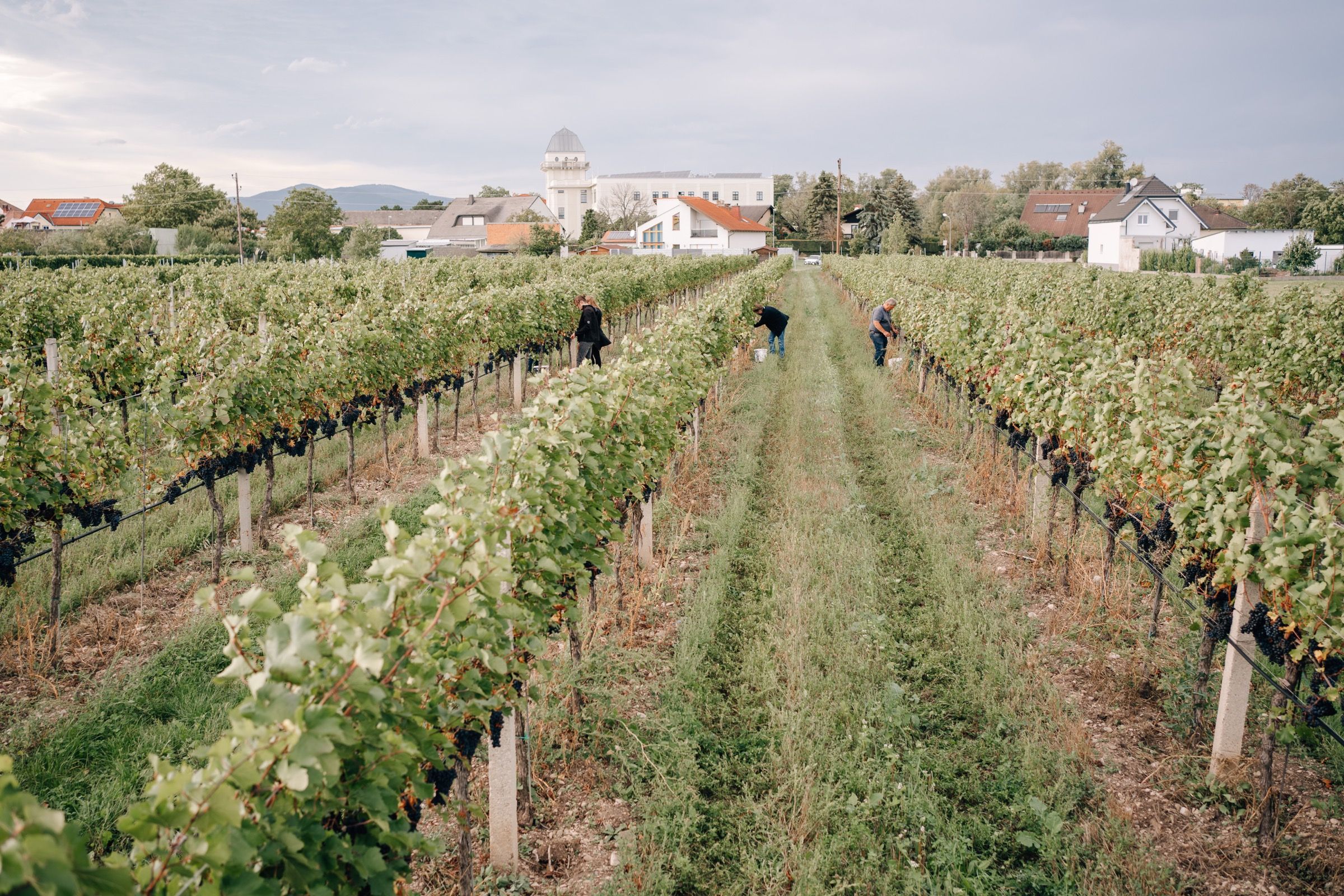
Hand pruning
In winter, vine by vine. Tools small and sharp - secateurs and pruning shears. This is the work that shapes the whole year: rush it, and you'll have problems in summer.
Tying up and green work
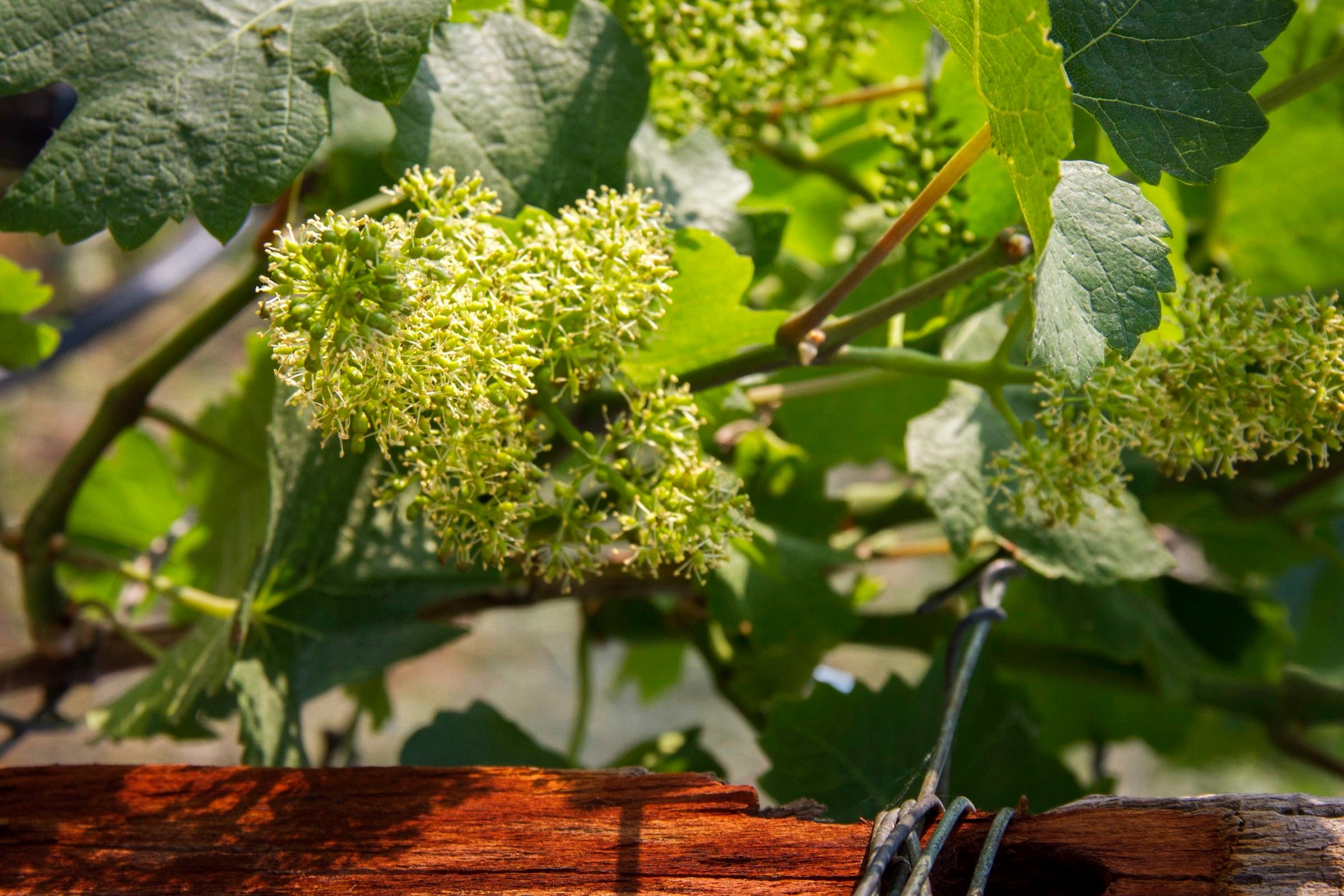
In spring we tie the shoots to the wire. In summer we thin the leaves around the grapes: more air, more sun, less fungal pressure. Where the grapes grow too densely, we thin them out: fewer berries on the vine means riper, more concentrated grapes in autumn.
Location and training
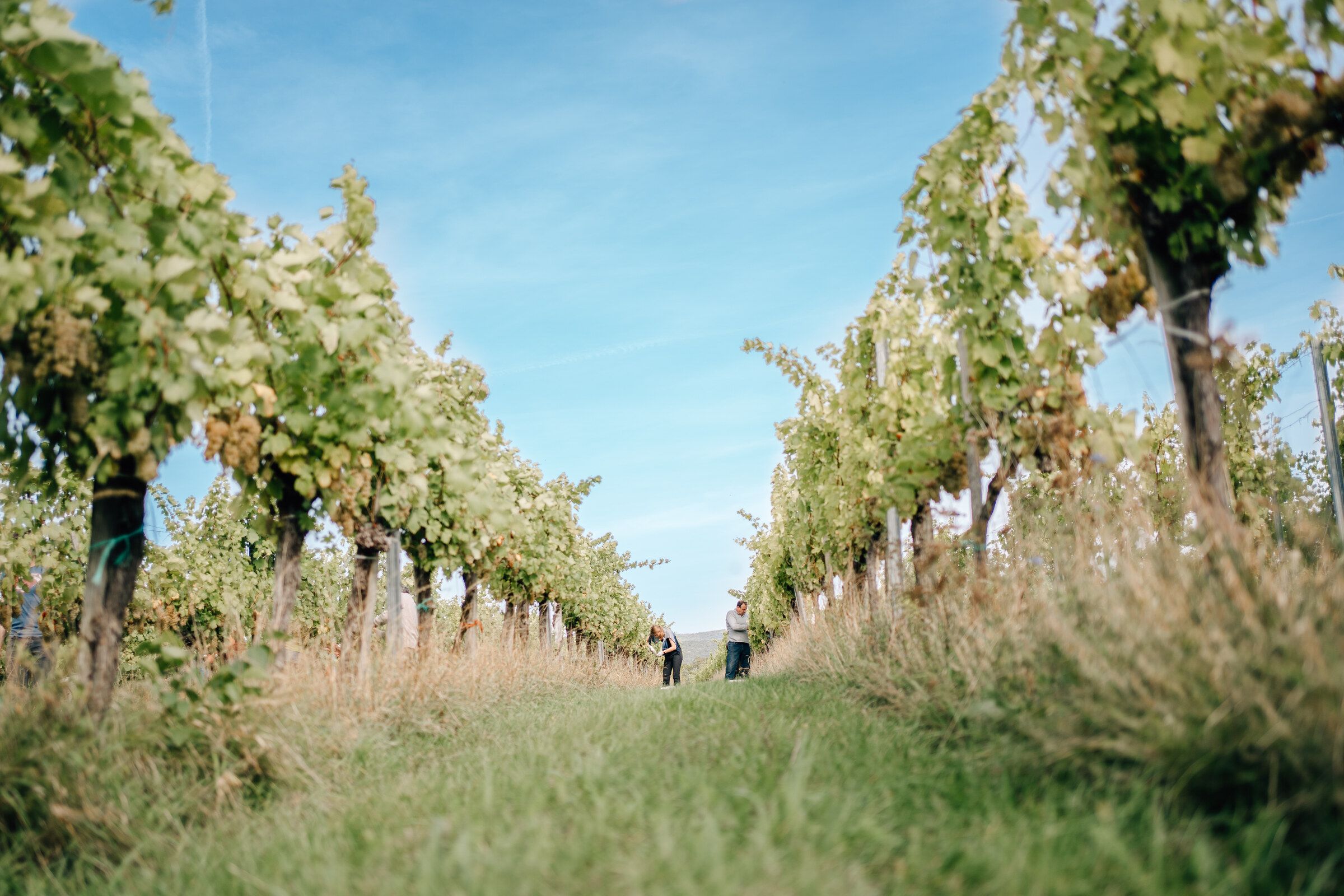
25 hectares spread across eight Rieden (vineyard sites) in Teesdorf, Leobersdorf, Baden and Tattendorf. Classic Guyot training, the standard method in the Thermenregion for generations.
Why we are changing our pruning method
For a long time we tried to put gentle pruning (wundarmer Rebschnitt) into practice. Technically we still stand behind it today. It just couldn't be passed on. Anyone who hasn't fully understood the system can't apply it. And nobody prunes 25 hectares alone. That is one of the mistakes we written down for ourselves.
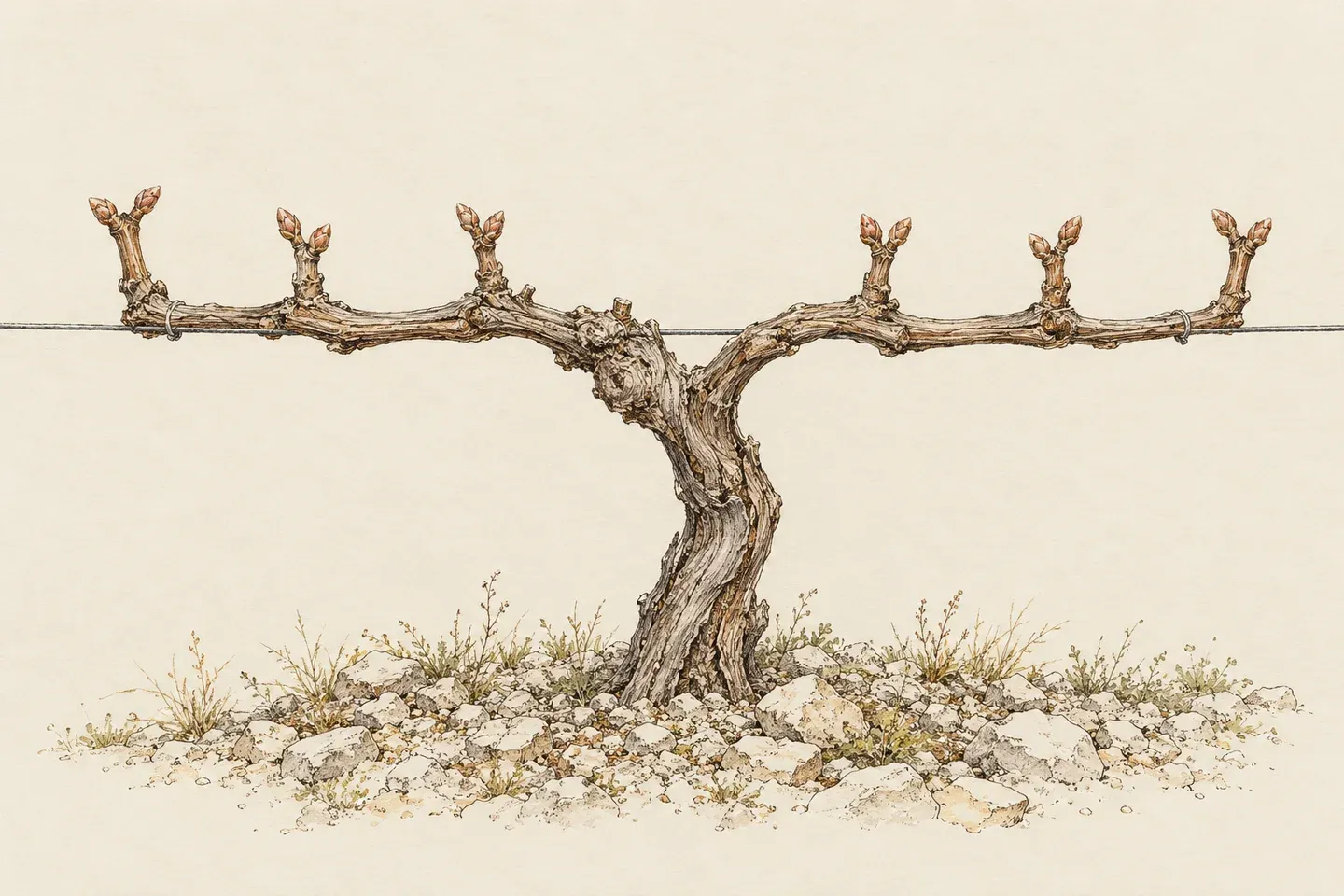
Our path now leads to cordon pruning. The structure: one arm on the left and one on the right, each with three spurs, two buds per spur. That makes twelve buds and so twelve shoots per vine.
The advantage lies in what falls away. Once the framework is in place, we only prune to the spurs and tying is no longer needed at all. We can work deep with the pre-pruner and afterwards essentially only have to tidy up the spurs. That is considerably faster. And above all, it can be explained.
On top of that come two things that do the vine itself good. The cordon carries more old wood; that makes the vine more robust and less prone to drought stress. And we can prune later because we leave everything standing at first: budburst is delayed and that takes away part of the late frost risk.
To be honest: building the framework is the difficult part. That work still lies ahead of us.
And above all, it can be explained.