
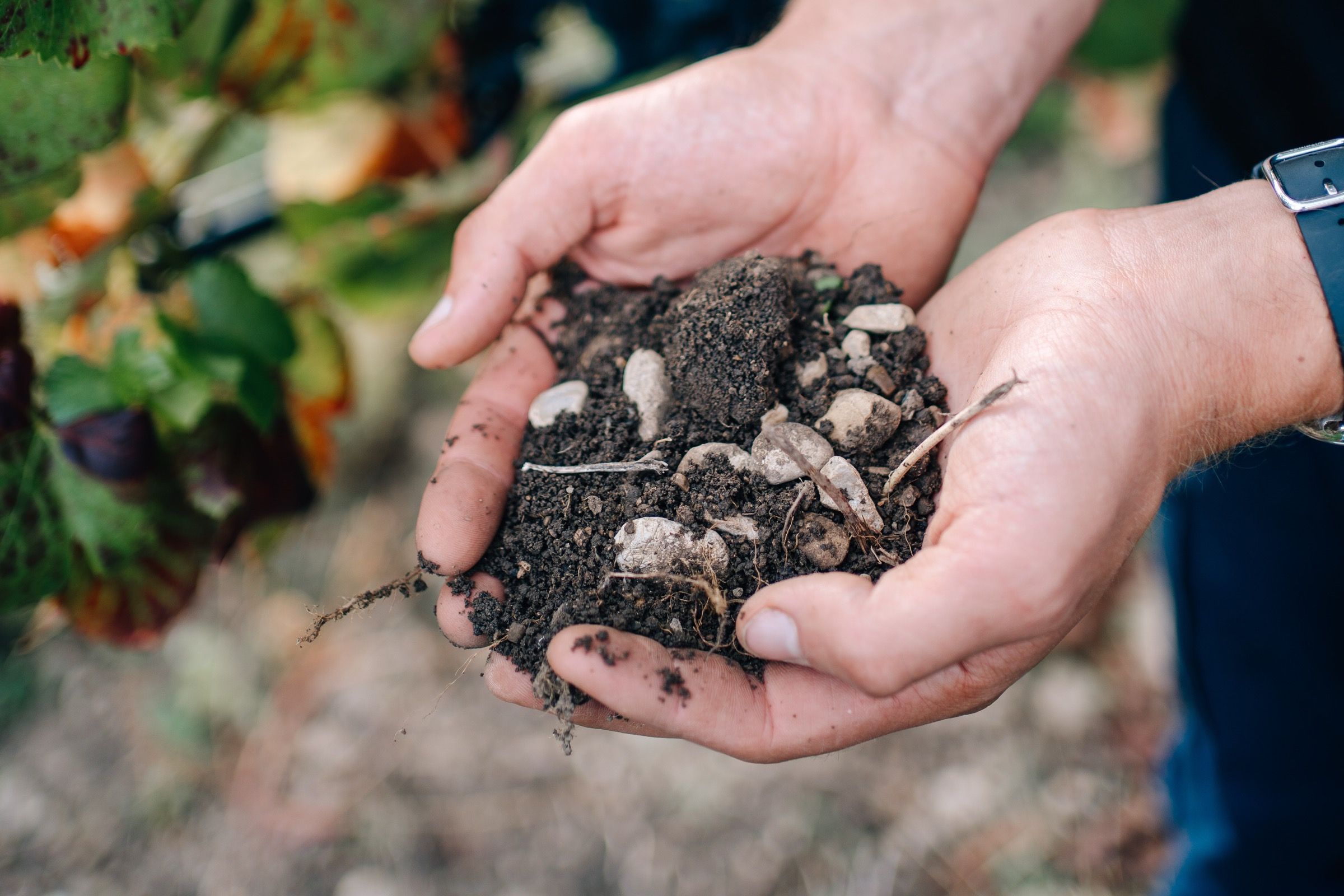
Pure gravel
We are in the Steinfeld, and that means gravel as far down as you dig. A soil that barely holds water, naturally brings little humus and whose surface is largely covered with fist-sized stones. Where a stone lies, nothing grows.
For us, building humus isn't an improvement — it's the basic precondition. Everything that follows serves this one goal.
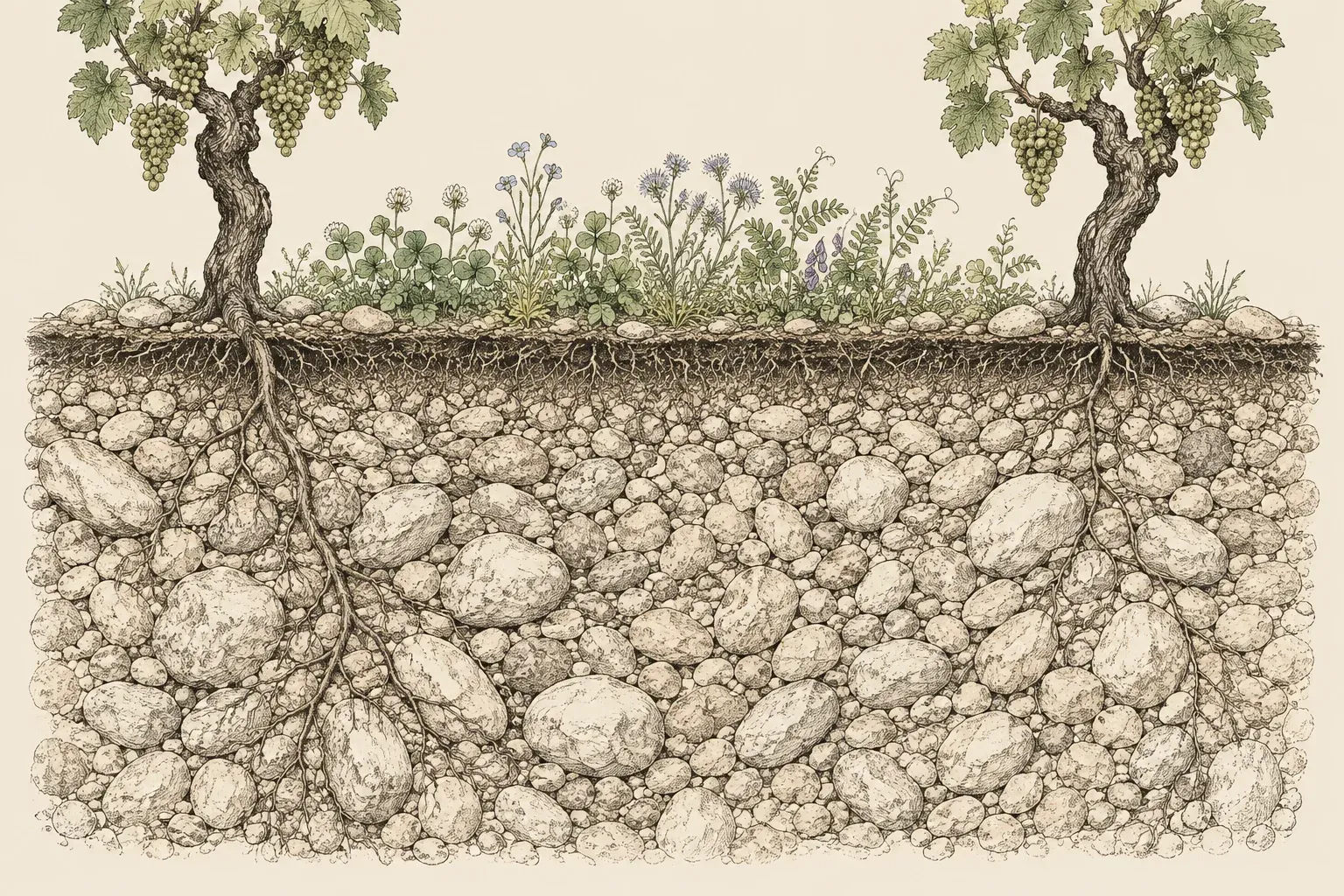
Where a stone lies, nothing grows.
Whole-area composting, twice a year
Twice a year we leave a cover crop standing, work it in and dress it with ferments. What happens then is microbial decomposition. Not rotting, but a controlled fermentation process that gets the soil life going. And it is the soil life that builds up the humus.
On gravel that is an art of its own. Getting any decomposition going at all with so little growth is a different matter from a mature soil. And we are nowhere near finished with it.
Always green
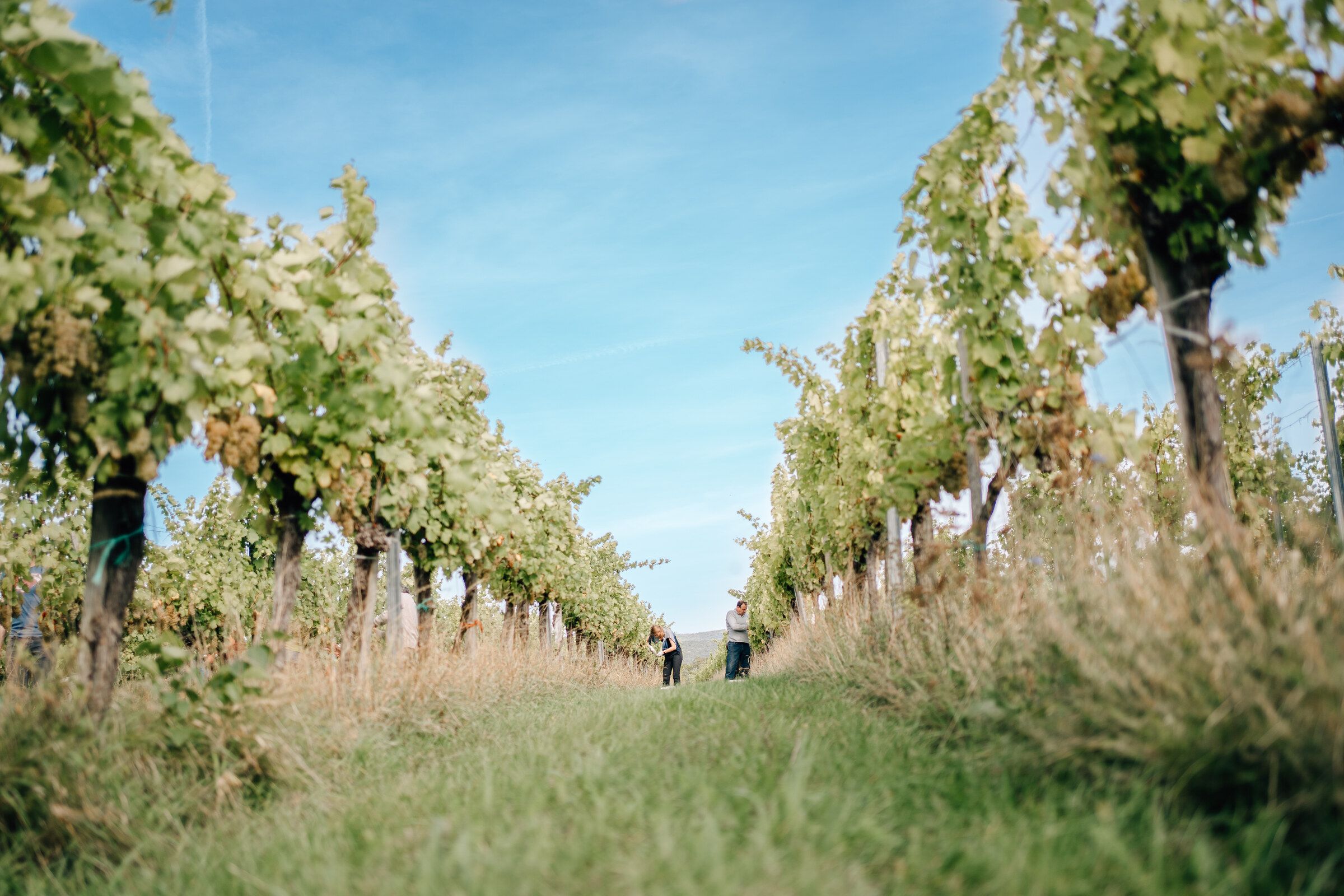
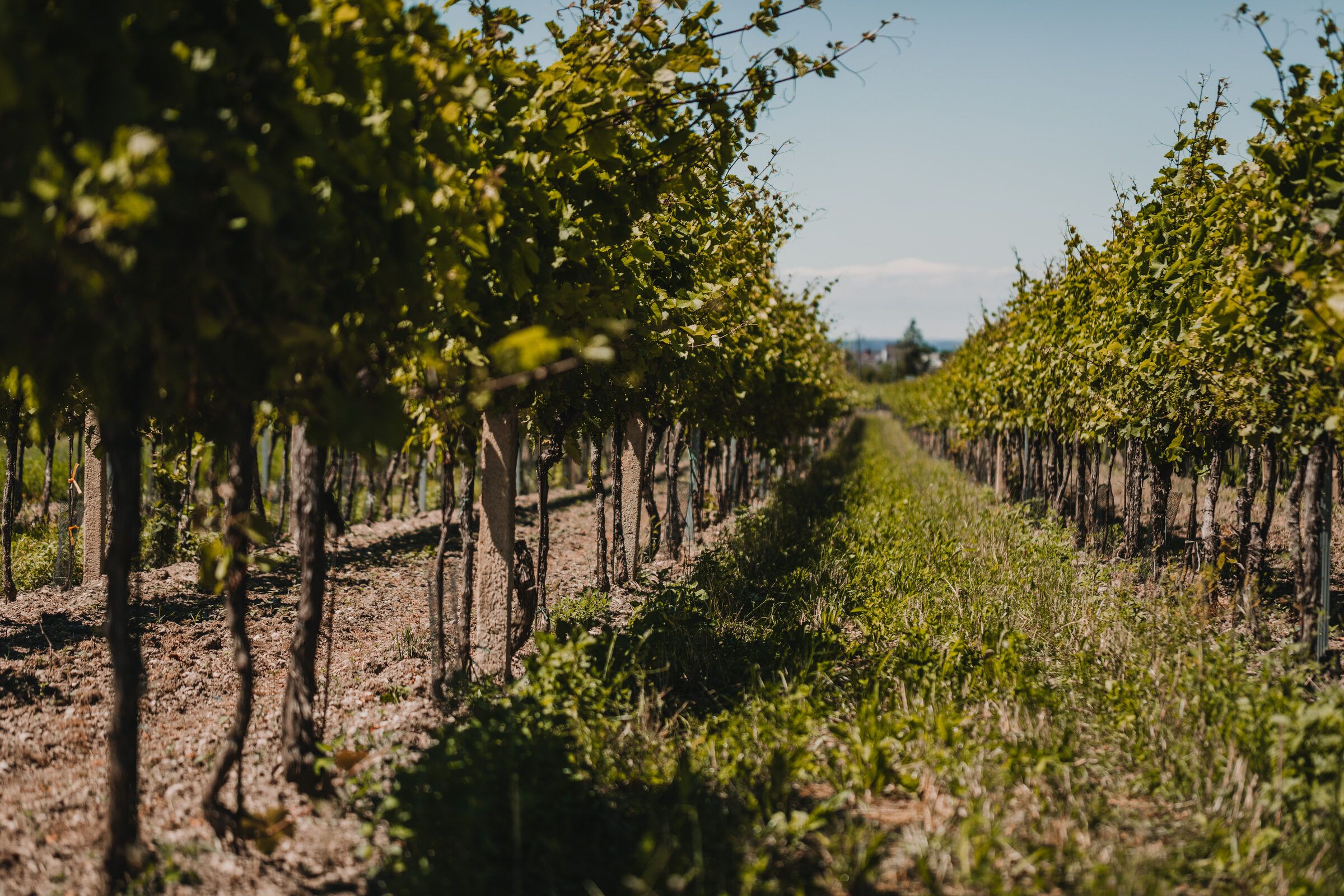
For us, every row is covered in green, all year round.
A cover crop stays for a year and a half. Our over-the-row technique makes that possible: because we have equipment that works across the row (such as the over-the-row sprayer), we don't have to drive down every alley. We alternate each year, driving one row one year and the other the next. So the freshly sown cover crop can stand undisturbed.
This is crucial for our mixtures, because they need time.
What we sow and what we don't
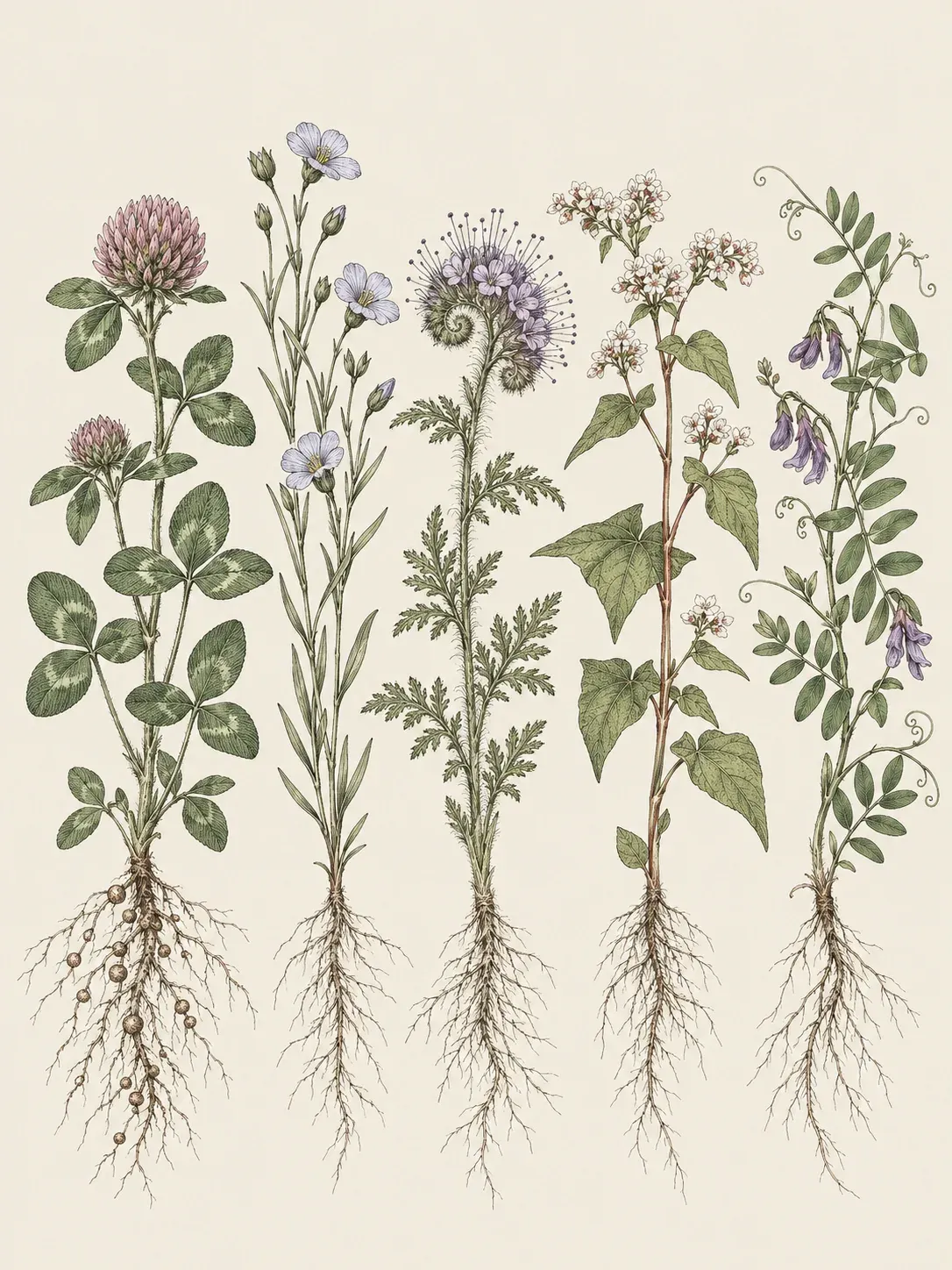
No grasses. Grass doesn't root deep enough and needs too much water; on gravel, it's the wrong partner.
Instead, a colourful organic vineyard cover crop mixture:
- Oil flax
- Gold-of-pleasure
- Cress
- Phacelia
- Buckwheat
- Red clover
- White clover
- Bokhara clover
- Sainfoin
- Bird's-foot trefoil
- Crimson clover
- Crown sweet clover
- Persian clover
- Alexandrian clover
- Bee pasture
We also mix in bristle oat, sorghum and Pannonian winter vetch.
The high proportion of legumes is deliberate: through their root nodules they fix nitrogen from the air and release it into the soil. In a sense, we fertilise from the air.
In a way, we fertilise from the air.
No herbicides
Glyphosate has no place on our soils. We don't use other herbicides either. What grows between the vines we keep in check mechanically or with mulch.
One piece of equipment that's standard elsewhere doesn't work for us: a rotary tiller breaks after a single row on gravel. Much of what's written in textbooks simply doesn't work here.
Much of what the textbooks say simply does not work here.
Why it's worth it
Little grows in the Steinfeld. Viticulture is one of the few uses that still stands up to this dryness. And if the rows between the vines are permanently green and never worked, one of the most species-rich areas in the region emerges there.
So a soil on which almost nothing grows becomes an area that supports insects.